AI Security Agents Are Moving Into Code Review. Keep Humans in the Loop.
Google’s latest infrastructure update offers a useful lesson for smaller teams: give AI a narrow job, demand evidence, and keep approval separate from detection.
In this article
A security warning arrives while a developer is finishing a change. It sounds serious, but the explanation is vague. Someone has to stop, reconstruct the problem, and decide whether it matters. Repeat that interruption often enough and even a sensible warning starts to feel like background noise.
That is the practical challenge behind the latest wave of AI security agents. Finding more suspicious code is only useful when a team can understand the findings and act on them.
What Google announced
In a September 18, 2026 engineering post, Google described agents that examine code changes before submission, validate potential vulnerabilities, and propose fixes. It says its approach prevents hundreds of vulnerabilities each month from reaching production. Those are Google’s reported results from its own infrastructure, not an independent benchmark or a promise about another company’s code.
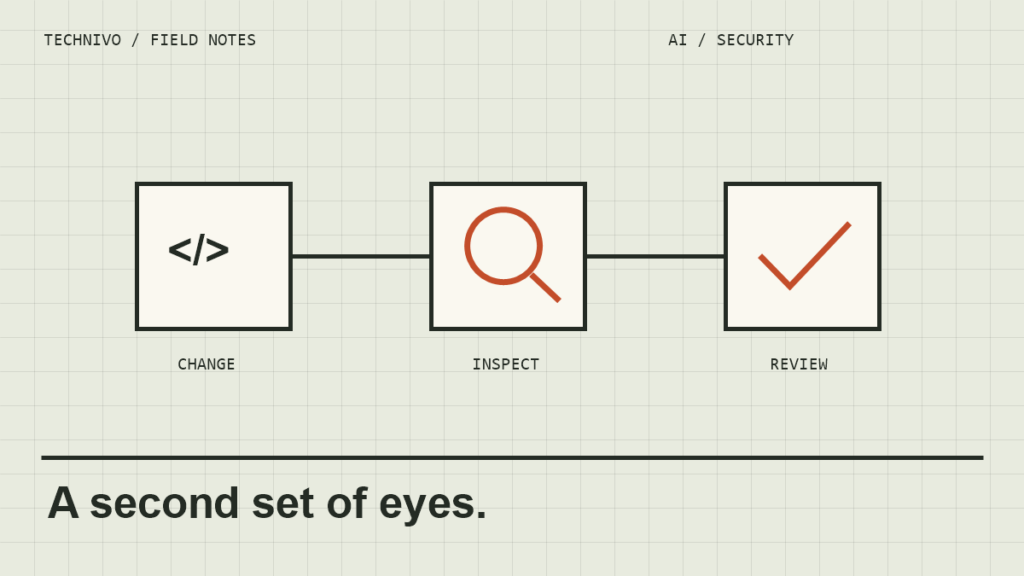
The interesting detail is the review boundary: proposed fixes go to a human reviewer. Google also describes a second scanning layer after submission. Its account is about several checks working together, rather than one model being trusted to pronounce code safe.
A useful pilot starts with one repository
For a smaller SaaS business, our recommendation is to start with a low-risk repository and a read-only reporting workflow. Give the pilot a defined owner and a specific question: can this tool find actionable problems without burying the team in unnecessary alerts?
Before enabling it, write down how many findings the team currently receives, how long investigation takes, and how often a warning leads to a real change. Without that baseline, an attractive dashboard can make an expensive experiment look successful.
A practical trial might cover one type of application change for two weeks. That duration is a planning example, not a validated benchmark. The important part is that the scope and end date are clear enough to review honestly.
Ask for an explanation a developer can check
We would require each proposed finding to identify the affected code, the assumption that makes it risky, a plausible way the problem could occur, and a suggested verification step. If the tool cannot explain those points, label its output as a lead for investigation.
Consider a hypothetical customer-support application. An agent flags an endpoint that returns account information. A useful report would distinguish a genuinely missing authorization check from a check performed in shared middleware. A confident paragraph alone does not settle that question.
Make permissions part of the evaluation
Before connecting a vendor to private code, ask what it can read, where the code is processed, how long logs are retained, and whether customer information could appear in those logs. For cloud-based tools, request the actual service terms and settings that apply to your account. A sales presentation is not enough to decide what access to grant.
Keep the initial permission set narrow. A tool that suggests changes does not automatically need the right to merge them, deploy them, or change production settings. Name the person responsible for approving those actions before the first automated fix arrives.
Measure the work that remains
The most useful pilot report would show accepted findings, rejected findings, investigation time, and regressions after fixes. Record the reasons for rejection; repeated misunderstandings may reveal missing context rather than a need for a larger model.
Our view: the strongest near-term case for security agents is a more useful review queue. Faster suggestions are welcome, but the business benefit comes from helping people reach sound decisions with less wasted effort.
Editorial analysis based on the linked Google engineering announcement, checked September 23, 2026. Technivo has not independently tested Google’s internal system.